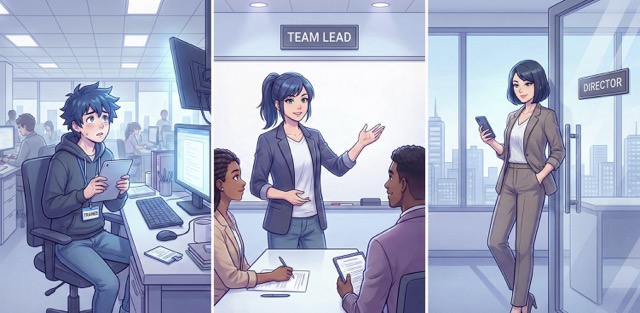
The Career Path of AI
Two years ago, ChatGPT showed up like a bright-eyed intern. It could draft emails, summarize documents, and answer questions. Helpful, but also clumsy, prone to hallucinations and in constant need of supervision. Now it's 2025, and that intern has been promoted. Multiple times. From Assistant to Superworker The early days of generative AI were about assistance. Companies treated it like a fancy search engine. AI was used it for quick drafts and basic research. Adoption was high, with nearly 90% of "hiring it" but the impact felt incremental. Then something shifted. By late 2024, AI stopped being a helper and became "value-add". Developers had productivity gains of 30% to 400%. Marketing teams shipped campaigns in hours instead of weeks. A financial analyst could model a 5-year recession scenario over lunch—work that used to cost three weekends. This wasn't about AI doing more tasks. It was about AI doing harder tasks—and doing them well enough that humans could focus on judgment calls instead of grunt work. Different Models, Different Personalities We keep talking about "AI" like it's one thing. It's not. Different models now have distinct working styles, almost like candidates with different personalities. Take two examples: The Colleague: Some models (like Anthropic's Claude) operate as collaborative partners. They ask clarifying questions. They explain their reasoning. They treat every task as a conversation, refining outputs based on feedback. If you're still figuring out what you want, this approach helps you discover it. The Executor: Other models (like OpenAI's o1 or dedicated coding agents) prefer autonomy. Give them a detailed specification, and they'll run for hours. Building, testing, iterating, without checking in. They assume you know exactly what you want. Great for senior engineers with clear requirements. Risky for anyone still exploring. Neither is objectively better. They're just suited for different work. The Real Skill Shift Most teams miss the real bottleneck. It's not the work anymore, it's the definition of the work. Senior experts are pulling massive returns from AI because they've spent years learning what "good" looks like. They can write a spec that anticipates edge cases before the AI starts running. Junior employees? They're stuck in a loop of vague prompts and disappointing outputs. If you can't describe the destination clearly, a faster car just gets you lost quicker. Using AI is easy. Getting value from it requires you to define the win upfront. What Comes Next By 2026, we'll see the shift from chatbots to agents, AI systems that don't just complete tasks but manage entire workflows. Applicants applications to setting interviews and processing applications. Running end-to-end workflows with codes. The org chart is becoming hybrid. For anyone managing work today, the question isn't whether to adopt AI. That ship sailed. The question is: which AI "candidate" fits which job? When do you need a collaborative partner who thinks out loud? When do you need an autonomous executor who delivers without hand-holding? The companies that figure this out first won't just be faster, they'll be structurally different. The rest will keep treating AI like a smarter intern and just to accomplish buying coffee and doing data entry.